
UN1748, UN2208 or UN2880? One Lab Result Decides Whether Your Calcium Hypochlorite Container Sails or Comes Back
UN1748, UN2208 or UN2880? One Lab Result Decides Whether Your Calcium Hypochlorite Container Sails or Comes Back
Executive Summary
Calcium hypochlorite — bleaching powder, HS code 2828100000 — is one of the most frequently rejected chemical commodities in container shipping. The IMDG Code lists nine separate entries for it, and three of them account for almost all routine exports. The dividing lines are narrow: available chlorine above 39% puts the cargo in UN1748, between 10% and 39% in UN2208, and hydrated material with 5.5%–16% water content in UN2880. Cross one of those thresholds and the packaging instruction, stowage category, segregation requirements and carrier acceptance policy all change. Buyers who inherit last shipment's paperwork rather than testing the current batch are the ones who end up paying for a returned container.
| IMDG classification | Class 5.1 oxidizing substance; marine pollutant in all entries; some entries carry a Class 8 corrosive subsidiary risk |
| UN1748 | Dry calcium hypochlorite or mixtures, available chlorine above 39% (8.8% available oxygen) — highest hazard |
| UN2208 | Dry, available chlorine 10%–39% |
| UN2880 | Hydrated calcium hypochlorite or hydrated mixture, water content 5.5%–16% |
| Packing group | PG II or PG III performance required |
| Packing instruction | P002 with special provision PP85 — bags, IBCs, large packagings and tank containers all prohibited |
| Stowage category | D — on-deck stowage only on cargo ships and limited-passenger vessels; prohibited on higher-capacity passenger ships |
| Emergency schedule | F-H, S-Q — fixed gas fire-extinguishing systems may be ineffective |
| Net weight per container | Typically capped at 14 tonnes |
| Booking lead time | 10–14 days before cargo ready date |
Three Entries, and the Test Certificate Decides Which One Applies
Calcium hypochlorite sits in IMDG Class 5.1 as an oxidizing substance. Every entry is classified as a marine pollutant, and several carry a Class 8 corrosive subsidiary risk on top of that. Of the nine IMDG entries, three cover the overwhelming majority of commercial shipments, and the boundary between them is a laboratory number, not a commercial description.
UN1748 covers dry calcium hypochlorite and dry mixtures with more than 39% available chlorine, equivalent to 8.8% available oxygen. This is the highest-hazard tier. UN2208 covers dry material with available chlorine between 10% and 39%. UN2880 covers hydrated calcium hypochlorite and hydrated mixtures with a water content between 5.5% and 16%. In descending order of hazard: UN1748 > UN2208 > UN2880.
There is one legitimate route that many shippers overlook. For hydrated calcium hypochlorite and hydrated mixtures, an accredited testing body can assess the transport conditions and issue an exemption. What that route does not permit is self-declaration. The proper shipping name, available chlorine content and moisture content must all be confirmed by a Transport Conditions Appraisal Report from a recognised laboratory. A verbal assurance from the manufacturer, or a report from a previous production batch, is not an acceptable substitute — and this is precisely where most classification failures begin.
Four Chokepoints Where Calcium Hypochlorite Shipments Fail
Chokepoint one: packaging. Beyond meeting PG II or PG III performance standards, the cargo must comply with packing instruction P002 and special provision PP85. That combination explicitly prohibits bags, intermediate bulk containers (IBCs), large packagings and tank containers. A large share of rejected shipments fail here: the manufacturer packs to domestic-market habit using woven sacks or jumbo bags, and the terminal refuses the cargo on sight. Buyers specifying delivered terms should confirm packaging format in the purchase contract, not at the port.
Chokepoint two: stowage and segregation. The stowage category is D. On cargo ships and vessels carrying limited numbers of passengers, on-deck stowage only is permitted; on passenger ships above the capacity threshold the cargo is prohibited outright. Stowage must be clear of heat sources and accommodation areas, and cargo transport units must be shaded from direct sunlight. Inside the container, packages need air circulation between them. The cargo must be segregated from acids, ammonium compounds, cyanides and peroxides, and must never be co-loaded with combustible material in the same container.
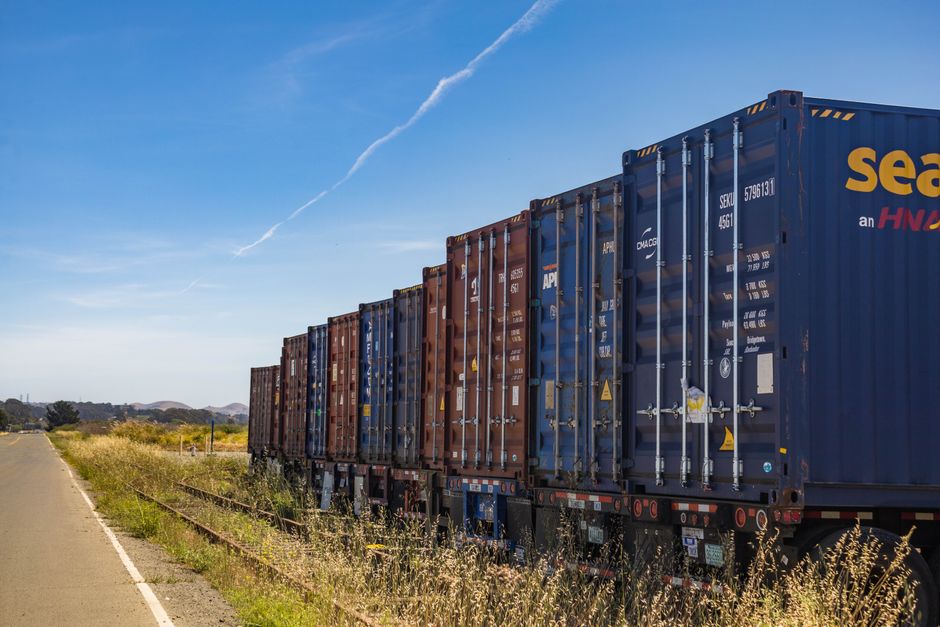
Chokepoint three: whether the carrier will take it at all. In practice this is the hardest gate. Calcium hypochlorite is sensitive to both temperature and humidity, and on tropical routings many carriers require a temperature-controlled or even refrigerated container. Slot-charter and vessel-sharing services routinely decline the commodity outright. Net weight per container is generally capped at 14 tonnes. The number of DG warehouses licensed to stuff calcium hypochlorite is small to begin with, and dunnage and securing materials are subject to their own requirements.
Chokepoint four: misdeclaration is a criminal matter. The emergency schedule is F-H, S-Q — meaning that once a fire starts, fixed gas fire-extinguishing systems may be ineffective. The container fire and explosion aboard the KMTC Hong Kong at Laem Chabang, and the undeclared calcium hypochlorite consignment intercepted by Qingdao Customs, are what that risk looks like in practice. Maritime authorities across multiple jurisdictions have prosecuted a series of false-declaration cases involving this commodity in recent years. The exposure is criminal liability, not a fine that can be absorbed as a cost of doing business.
A Five-Step Booking Checklist
1. Fix the UN number before you negotiate price. Test the current production batch, determine from available chlorine and moisture content whether the cargo falls under UN1748, UN2208 or UN2880, and obtain the Transport Conditions Appraisal Report. Until that number is settled, every freight quotation you receive is provisional.
2. Resolve packaging first, not last. Select compliant containers under P002 and PP85 — no bags, no IBCs, no tank containers. The packaging manufacturer applies for the Packaging Performance Test Report; the exporter then applies to the local customs authority for on-site inspection, which issues the Dangerous Goods Packaging Use Certificate.
3. Book 10 to 14 days ahead. Not every carrier accepts this commodity. Confirm space in advance and declare the UN number, proper shipping name (for example CALCIUM HYPOCHLORITE, DRY), hazard class, packing group, MSDS and DG packaging certificate number truthfully. Arrange nothing downstream until the carrier's DG Approval is in hand.
4. Run a documentation consistency check. The composition, UN number and hazard class stated on the MSDS, the appraisal report, the DG packaging certificate and the customs declaration elements must match exactly, and the packaging technical specification must reconcile with the appraisal report. A single inconsistency is how a container starts sitting at the terminal.
5. Sequence stuffing and direct loading properly. Use a warehouse licensed for DG stuffing, load to IMDG segregation rules, and keep the cargo away from acids, reducing agents and organic materials in the same container. High-hazard entries generally require direct loading alongside the vessel, so customs clearance and the loading window have to be scheduled together well in advance.
Market Outlook
The special enforcement campaign on dangerous goods carried by sea is still running, and inspection intensity on commodities with a history of misdeclaration — calcium hypochlorite prominently among them — will tighten rather than ease. Two directions are already visible. First, the pool of carriers willing to accept the commodity will keep narrowing, and temperature-controlled container requirements will extend to more routings. Second, documentation consistency checks are moving from spot audits to standard procedure. For chemical exporters and their overseas buyers, getting the appraisal–packaging–booking sequence right and retesting every batch is shifting from a mark of professional handling to a baseline condition of market access.
JETWAY Supply Chain is a Ministry of Transport-licensed NVOCC and a member of CIFA, FIATA and WCA, headquartered at Tianjin Port. We specialise in chemical export logistics — fine chemicals, base chemicals and specialty chemicals — with more than a thousand shipments delivered at a 100% fulfilment rate, across the China–India–Red Sea, China–South America, Southeast Asia and Belt & Road multimodal corridors. For classification review, DG packaging certification or carrier approval on your next chemical shipment, request a quote or contact our dangerous goods desk.