
US West Coast Rates Spike 12.5% While Europe Falls 3.7%: Three Trade Lanes Move in Different Directions
US West Coast Rates Spike 12.5% While Europe Falls 3.7%: Three Trade Lanes Move in Different Directions
Executive Summary
The Shanghai Containerized Freight Index (SCFI) rebounded 4.7% to 3,205.97 this week, but the headline masks a sharp divergence across major trades. Trans-Pacific lanes surged after the August 1 general rate increase (GRI) took hold: Shanghai–US West Coast rose 12.5% to USD 6,229/FEU and Shanghai–US East Coast climbed 12.6% to USD 9,054/FEU. In contrast, Europe and Mediterranean spot rates both dropped 3.7%, and the SCFIS Europe settlement index fell a further 5.4% on August 3, confirming that the Asia-Europe correction is still intact. The Persian Gulf added a third vector, up 6.8% on Red Sea risk premiums and emergency fuel surcharges. For shippers, the near-term booking priority is clear: lock trans-Pacific space before rate volatility widens, stay patient on Europe, and quote Persian Gulf cargo with EFS shown as a separate line item.
| SCFI composite index | 3,205.97 (+4.7% WoW) |
| Shanghai–US West Coast | USD 6,229 / FEU (+12.5%) |
| Shanghai–US East Coast | USD 9,054 / FEU (+12.6%) |
| Shanghai–Europe base ports | USD 3,039 / TEU (-3.7%) |
| Shanghai–Mediterranean | USD 4,189 / TEU (-3.7%) |
| SCFIS Europe settlement (Aug 3) | 3,519.81 (-5.4%) |
| Shanghai–Persian Gulf | USD 4,894 / TEU (+6.8%) |
| Drewry WCI world composite | USD 4,255 / FEU (-3%) |
| 2026 USWC GRIs to date | 15 |
Why the Trans-Pacific Is Breaking Away
The August 1 GRI was the fifteenth such increase on the US trades this year, and it landed with more force than the market expected. Evergreen and HMM raised rates by USD 3,000/FEU, while CMA CGM, COSCO, Yang Ming, and ZIM each added USD 2,000/FEU. The result is that the Shanghai–US West Coast rate jumped 12.5% to USD 6,229/FEU and the US East Coast rate rose 12.6% to USD 9,054/FEU within a single week.
The strength is partly seasonal. Back-to-school and early peak-season cargo is moving into the supply chain, giving carriers enough volume to enforce higher rate levels. But it is also structural: carriers have tightened capacity discipline on the trans-Pacific through blank sailings and slow-steaming, and the GRI calendar has conditioned BCOs and forwarders to expect regular step-ups. The risk now is that the headline rate is increasingly an "announced" rate. Drewry's World Container Index, which tracks paid freight across multiple indices, actually fell 3% to USD 4,255/FEU this week — a signal that contract and spot execution is weaker than the SCFI Shanghai-outbound figure alone suggests.
Europe and Mediterranean Keep Sliding
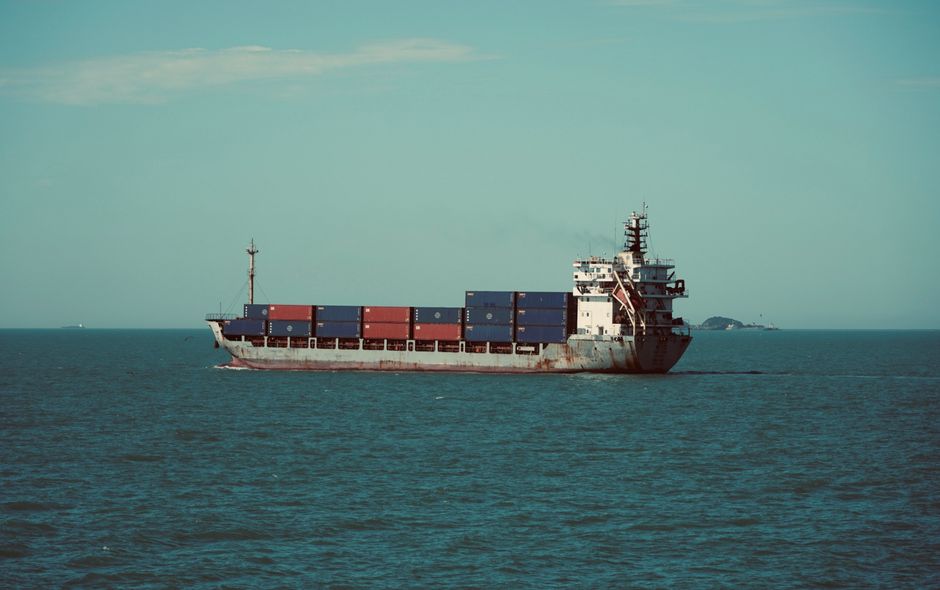
While the Pacific was rising, Europe was moving in the opposite direction. Shanghai–Europe base ports fell 3.7% to USD 3,039/TEU and Shanghai–Mediterranean dropped by the same percentage to USD 4,189/TEU. The August 3 SCFIS Europe settlement index, which tracks actual executed rates on the trade, fell 5.4% to 3,519.81, confirming that the spot market is softer than the forward curves had implied.
Alliance pricing for early August Europe loads underscores the weakness. GEMINI members are averaging around USD 4,550 for large containers, Maersk opened at USD 4,600, and ONE is advertising special rates as low as USD 4,208 from August 8. These are not tactical spot dips; they reflect lower cargo volumes during the European summer holiday period and a return of effective capacity as Red Sea diversions have been absorbed into weekly schedules. The demand side is also cooling: inventory restocking in Europe that began in the first half of 2026 has slowed, and rest-of-year ordering remains cautious.
The Persian Gulf Adds a Third Axis
Persian Gulf rates completed the three-way split, rising 6.8% to USD 4,894/TEU. The move is not volume-driven. Houthi activity around Saudi maritime targets and continued restrictions at the Bab-el-Mandeb strait have led several carriers to add emergency fuel surcharges (EFS) from August 1. The risk premium is now embedded in the base rate, and any further escalation in the Red Sea corridor would push the trade higher quickly.
For forwarders, the practical point is that Persian Gulf quotes are increasingly incomplete if they show only the ocean freight component. EFS, war-risk surcharges, and contingency routing clauses are all moving independently of the base rate, and shippers need to see them broken out. The same is true for cargo ultimately bound for the Eastern Mediterranean via Jebel Ali or Saudi hubs — the cost stack is changing weekly.
What Shippers Should Do This Week
On the trans-Pacific, move now if the cargo is ready. The August 1 GRI is in the market, but the spread between announced and executed rates suggests carriers will fight harder to hold the next round of increases. Booking two weeks later risks paying another GRI step, and the current back-to-school demand window gives carriers pricing power through mid-August.
On Europe, wait one to two weeks if possible. The combination of summer weak demand, returning effective capacity, and alliance special rates points to further softening. Shippers with flexible ETAs should request rolling rate quotes rather than locking long-dated bookings.
On the Persian Gulf, quote with all surcharges visible. Base rates will continue to reflect Red Sea risk, and the line items that sit above the base rate are where the volatility is concentrated. Showing EFS and war-risk separately builds trust and protects margin if the situation escalates.
Market Outlook
The next two to four weeks will be a tug-of-war between announced and executed rates on the trans-Pacific, while Europe continues its seasonal correction and the Persian Gulf retains a geopolitical risk premium. The headline SCFI number is likely to stay elevated because the US trades carry a heavy weight in the index, but the underlying market is more fragile than the composite suggests. BCOs and forwarders should stop thinking in terms of a single "market" and manage each lane on its own cycle: trans-Pacific for speed, Europe for patience, and Persian Gulf for transparency on surcharges.
JETWAY Supply Chain provides ocean freight, air cargo, rail, customs brokerage, and warehousing solutions across Asia-Europe-US trade lanes. Request a quote or contact our team.