
EU REACH Now Wants 90 Days' Notice on Electronic Chemicals — Your October Container Should Have Been Filed in July
EU REACH Now Wants 90 Days' Notice on Electronic Chemicals — Your October Container Should Have Been Filed in July
Executive Summary
Bring electronic-grade chemicals into the EU and your filing clock now starts 90 days before the vessel arrives, not on arrival. The rule went live on 1 August. Miss the window and the box sits outside the port — customs will not release it, and nothing you file at the border afterwards fixes it. Below: what changed, which 12 substances are caught, what it adds to every container, and a five-step check to run before your next purchase order.
Key Figures
| Rule in force | 1 August 2026 |
| ECHA operational guidance issued | 25 July 2026 |
| Pre-arrival declaration window | 90 calendar days before arrival |
| Previous practice | Declare on arrival, complete the file afterwards |
| Substances added (Annex XVII draft) | 12 electronic-grade chemicals |
| Named categories | High-purity HF, silicon nitride precursors, photoresist solvents |
| Laboratory report required | Batch-level impurity profile, ISO/IEC 17025 accredited |
| New for precursors | Full life-cycle substance declaration |
| Added compliance cost | EUR 800–1,500 per container |
| 17025 laboratory lead time | Up to 4 weeks at busy labs |
| Annual impact at 200 containers | EUR 160,000–300,000 |
| Air freight fallback gap | Over USD 10,000 per container vs ocean |
What Changed on 1 August
The 90-day clock is the whole story. ECHA's operational guidance of 25 July puts it plainly: as the EU importer of record, you must complete the REACH declaration 90 calendar days before the cargo arrives, with the full dossier pre-submitted rather than assembled at the border.
The old way is gone. You used to declare on arrival and top up the file later. Everything is now due three months out.
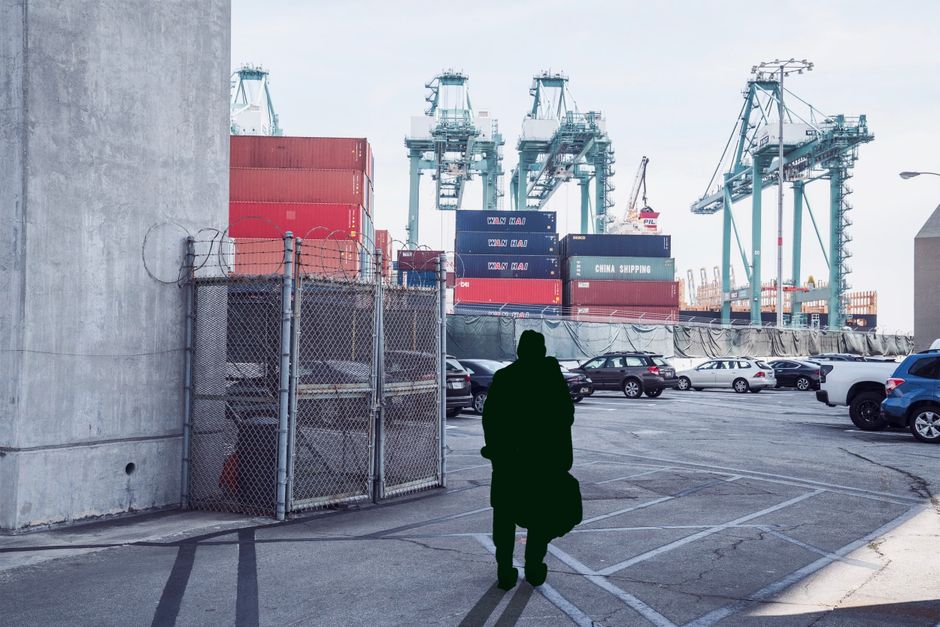
File a day late and the container waits outside the port, because the system will not release it — there is no expedited lane, no pay-the-fine-and-proceed option, and no way for your Chinese supplier to file this for you, since under REACH the duty sits with the importer, and that is you.
Watch out for the second half of this. The draft amendment to Annex XVII pulls 12 electronic-grade chemicals onto the restriction list in one move: high-purity hydrofluoric acid, silicon nitride precursors and photoresist solvents are all named. My read: enforcement will be tight from day one. When a comparable rule landed at Tianjin last year, inspectors pulled more than twenty consignments in the first month.

The 12 Substances — and What Each One Now Demands
Three families cover most of what actually moves. High-purity hydrofluoric acid — the standard etchant — needs a batch-level impurity profile report from an ISO/IEC 17025 accredited laboratory. A stamp from a small local lab is not accepted. Customs reads the accreditation number, not the letterhead.
Silicon nitride precursors carry the heaviest load: a full life-cycle substance declaration covering every step from raw material to finished film chemistry. Frankly, this is the one that breaks people. Without two connected systems on your supplier's side — batch records and material flow — the form cannot be filled in honestly.
Photoresist solvents face the same impurity requirement, plus batch reconciliation. Solvent lot 4417 went into which resist batch? You need that answer on paper, signed.
Put simply: the test is not whether your cargo is hazardous. The test is whether your documents can follow every drum, every batch, back to source. If they cannot, the container goes home.
What It Actually Costs You Per Container
Start with the calendar, because that is where the money leaks. A 90-day window means October cargo needed filing in July. Miss it and the sailing slips, your customer's line stops, and air freight is no rescue at these volumes.
The direct cost is easier to size. Dossier pre-submission plus batch-level impurity testing adds roughly EUR 800 to EUR 1,500 per container, depending on the substance. That looks small on one box. It is not — it repeats on every box, every time.
The hidden cost is the laboratory queue. Busy 17025 labs are booking four weeks out. Call them two weeks before your filing deadline and you have already lost.
Run it across a year and the number gets uncomfortable. At 200 containers of electronic chemicals into the EU, an added EUR 800 to EUR 1,500 per box is EUR 160,000 to EUR 300,000 of new fixed cost annually, and that is before you count the boxes you have to airfreight because a filing window closed, where the gap over ocean clears USD 10,000 per container and can swallow half the margin on a product line.
Here's the thing: a tariff is a one-off you can price into a quotation. This is a recurring cost on every shipment, every year, and it will not go away when trade talks improve.
Five Steps Before Your Next Purchase Order
1. Screen your own catalogue this week. Pull the product names and HS codes and check them against the 12 restricted substances. Ten minutes of work.
2. Book the laboratory slot before the PO, not after. If a product is listed, the 17025 impurity report is the long pole — reserve the slot first and negotiate the price second.
3. Get the batch numbering scheme in writing from your supplier. If solvent lots cannot be tied to finished lots, you have a documentation gap, not a supply problem, and it will not be solved at the port.
4. Back-count 90 days from every planned arrival through December. Put those filing dates into the shipping calendar, next to the ETDs. Treat them as hard as a cut-off.
5. Reconcile before stuffing. The impurity report, the safety data sheet and the declaration must agree on substance name, CAS number and batch. One mismatch and the filing is rejected outright.
Three questions decide the outcome. Is the substance on the list? Is the lab accredited? Is the filing 90 days early? Miss any one of them and the shipment is at risk.
Market Outlook
More of this is coming. ECHA has signalled another expansion of the restriction list next year, reaching further into electronic-grade solvents and precursors. My advice: stop treating batch-level traceability as a compliance project and start treating it as a shipping standard, the same way you treat a packing list. Buyers who build the document chain now will keep sailing while competitors renegotiate delivery dates. Leave the files messy and next year hurts more than this one. So — which of your product lines could you trace to batch level today, honestly?
JETWAY Supply Chain moves chemicals and dangerous goods out of Tianjin and the major Chinese ports — MOT-licensed NVOCC, CIFA and FIATA member, WCA network, with a 100% on-time record across a thousand-plus consignments. Our DG desk reviews classification, batch documentation and REACH dossier readiness before a booking is confirmed, on the China–India–Red Sea, South America and Southeast Asia lanes. Send us the product name and the destination port and we will tell you what is missing. Request a quote.